When it comes to safety, we’re often not too honest with ourselves.
In a recent survey, 27% of people believe that they are less likely than others to get hurt during everyday activities.
The survey, representative of British Columbians and conducted from January 30 to February 1, 2026, also found that almost one-third (29%) of people admit to having ignored a safety precaution because they were confident that they wouldn’t get hurt.
When it comes to specific risky activities, 15% of people think they could text while driving more safely than the average driver. And even though ladder falls can happen to anyone, 26% of people believe they’re personally less at risk than others.
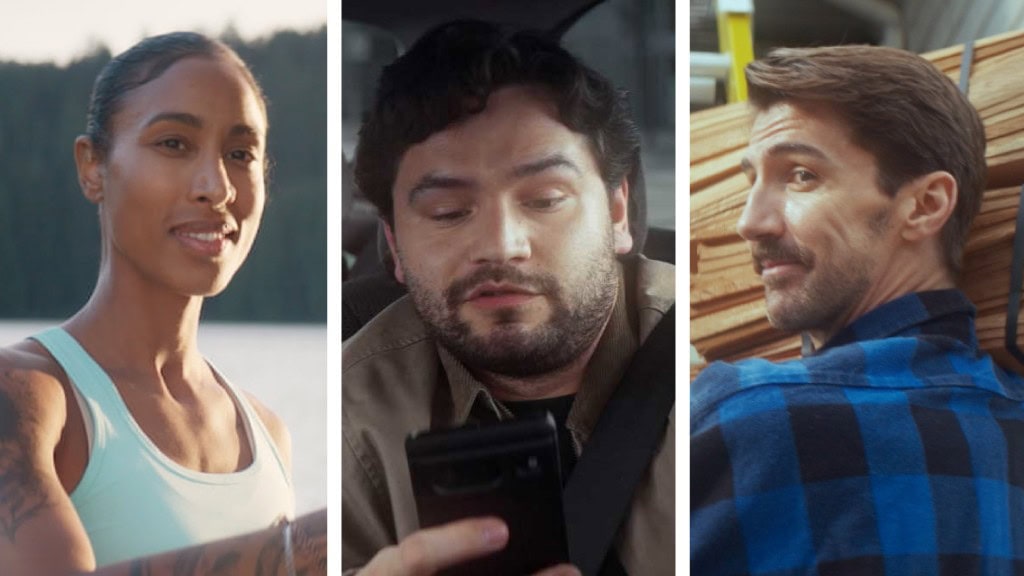
But when we believe that injuries just won’t happen, well, that can put us at risk for a serious injury. That’s the idea behind our latest campaign, called The Truth Hurts. The campaign features different ways that people lie to themselves about why they can do something that puts them at risk, such as texting and driving or ignoring workplace safety procedures. The scene around them slowly becomes a ridiculous but unsettling dreamworld that’s revealed to exist only in their head, as they lay injured as a result of the incident that actually occurred.
Injuries affect more people than one might believe. Preventable injuries, such as poisonings, falls, burns, and road-related crashes and collisions, are the leading cause of death for 1 to 44-year-olds in British Columbia (BC). On average each year, more than 3,500 people die, and 35,000 people are hospitalized for an injury.
We want you to take a second and reflect on that voice inside your head: what’s it telling you? Do you believe it, or do you put the phone away? Put on that lifejacket? Review the safety manual?
And if you forget, we’re here to give you a little reminder: when you’re searching online, scrolling your social feeds, binge-watching your favourite show, or waiting to see a movie on the big screen. On social, you’re invited to play the classic game “2 Truths and a Lie” to test your attitude towards preventable injuries.
Because when you lie to yourself, the truth hurts.
Learn more about this campaign
About This Survey
The survey was conducted online by Leger among of a representative sample of 1,002 adult British Columbians between January 30 to February 1, 2026. Respondents were randomly recruited through LEO’s online panel. Results were weighted according to age, gender, region, and education to ensure a representative sample of the population of British Columbia.
As a non-random internet survey, a margin of error is not reported. For comparison, a probability sample of this size would have a margin of error of ±3.1 percentage points, 19 times out of 20.
Data Sources
BC Ministry of Health creator. Vital Statistics Deaths. BC Vital Statistics Agency [publisher]. Data Extract. BC Vital Statistics Agency (2025). https://www2.gov.bc.ca/gov/content/health/health-forms/online-services
BC Ministry of Health [creator]. Vital Statistics Deaths. BC Vital Statistics Agency [publisher]. Data Extract. BC Vital Statistics Agency (2025).
Canadian Institute of Health Information [creator]. Discharge Abstract Database (Hospital Separations). British Columbia Ministry of Health [publisher]. Data Extract. MOH (2025). Retrieved from BCIRPU Injury Data Online Tool, 2025.
Rajabali F, Zheng A, Turcotte K, Bruin S, Pike I. (2022). Cost of Injury in British Columbia 2022. BC Injury Research and Prevention Unit: Vancouver, BC.